

Bringing Chinese Soup Ingredients into the U.S.: A Family Travel Checklist
If a relative wants to bring Chinese soup ingredients into the United States, check the actual contents before packing and declare them on arrival. “Dried,” “herbal” and “a gift for the new parent” are not enough to establish whether a packet can enter. USDA’s traveler guidance requires declaration of agricultural products and explains that U.S. Customs and Border Protection officials determine whether they meet entry requirements.
This guide is for food carried in a traveler’s luggage for a household’s own cooking. It does not cover commercial orders, mailed packages or products brought as medicines. Golden Month publishes it and sells cook-at-home soup kits. Official guidance was checked October 8, 2026; check again before the trip.
Identify what is in the bag
Start with a photograph of the full label and a written ingredient list. A family name for a soup may mean a particular recipe to a grandparent, but it does not tell an inspector everything in the packet. Keep Chinese ingredient names alongside their English names where available. Ask the seller about an unidentified ingredient instead of guessing from its appearance.
Before the soup ingredients travel
- IdentifyContents, origin, processing and packaging
- CheckRead official guidance; ask about anything unclear
- DeclarePresent the items; officials decide entry
Describe the food precisely: Record what each item is, where it originated, whether it is whole or ground, and how it was processed. Note any meat or other animal ingredients, including those in a separate seasoning sachet. Keep the details for every component of a mixed pack.
For example, “one bag of soup herbs” leaves several questions unanswered. A label naming the roots, seeds and other ingredients, with their origin and preparation details, gives the agency something specific to assess. This is an example of useful information, not a list of permitted ingredients.
Check the right official guidance
The USDA Animal and Plant Health Inspection Service (APHIS) plant guidance says requirements vary with the type of plant, the part being brought, its country of origin and intended use. The same broad description can cover products with different requirements. Some situations also need official documents, so leave time to ask before departure.
- Plant ingredients: Use the relevant category linked from APHIS’s traveler starting page, including fruits and vegetables or plants and plant parts. Do not apply a rule for one ingredient to an entire blend.
- Tea, nuts or spices: The specific APHIS guidance distinguishes products by their contents and processing. For example, its rules for herbal infusions are more detailed than a blanket rule for anything called tea. Do not assume that a soup mix falls into the same category.
- Animal ingredients: Check the meat, poultry and seafood guidance and the appropriate agency contact. Origin and processing matter here too; drying an ingredient does not by itself answer the entry question.
Keep the itinerary in view: Give the agency the countries involved and the U.S. entry point. Official guidance can distinguish destinations and routes. An answer for one itinerary should not be treated as permission for a different trip.
Ask before someone packs it
If the published guidance does not clearly cover the exact item, use the plant or animal-product contacts on APHIS’s official traveler page. Attach readable label photos if the agency requests them. This message gives a relative a place to start:
“I plan to carry these food ingredients in my personal luggage for family cooking. The ingredients are [list], originating in [country or countries], and processed as [details from the label or seller]. The quantity is [amount], in [packaging]. I will travel from [country] through [route] and enter at [U.S. airport or crossing] on [date]. Could you tell me the applicable requirements and whether I need any documents before traveling?”
Leave an unknown as unknown: If the seller cannot identify the contents or origin, say so. A cousin’s uneventful trip with a similar bag is not a ruling on this one. Resolve the question before relying on those ingredients for the household’s first meals.
Keep the details for arrival
APHIS recommends retaining receipts and original packaging as evidence of origin. Keep them with the food rather than repacking everything into unmarked bags. A written ingredient list can help explain the contents, but it does not replace any required official documentation.
Declare and present the items: Follow the entry instructions and tell CBP officials about the agricultural products you are carrying. Officials may inspect them and make the entry decision. Declaring an item is not a promise that it will be admitted.
Do not turn a luggage question into a mailing plan without checking the separate rules. APHIS’s animal-product guidance, for example, distinguishes personal baggage from mailed commodities. This traveler checklist does not establish requirements for a courier shipment or a seller’s delivery.
Plan food without relying on the suitcase
A relative can still bring something valuable if the ingredients stay behind: the written family recipe, a clear shopping list and time to cook. Decide which familiar dishes the household actually wants, then check what can be sourced for the U.S. address. Our U.S. guide to buying soup ingredients or kits compares individual ingredients with pre-portioned blends.
Golden Month’s U.S. soup packages are dried blends that require cooking and added groceries. They may fit when the family wants those formulas and someone has agreed to make them. Choosing a U.S. storefront does not establish a U.S. warehouse, a delivery date or customs clearance for a particular shipment. Check current availability and the terms for the receiving address.
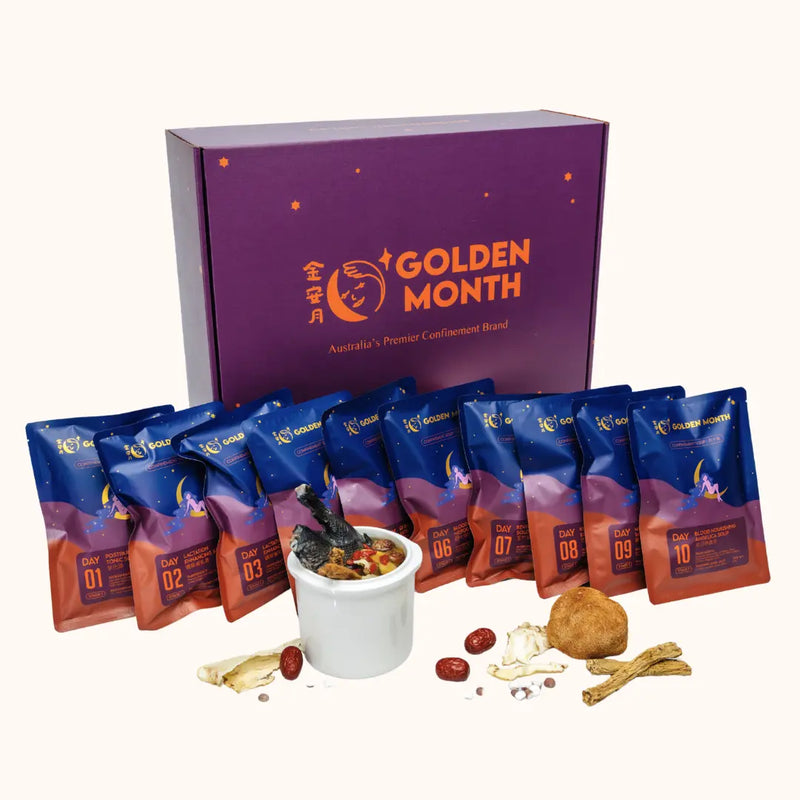
Read the soup preparation instructions with the cook before choosing a kit. If relatives and friends are sharing the work, use the meal-train guide to assign shopping, cooking and cleanup. Keep a meal the family already likes as a backup while travel or delivery details remain unsettled.
Have a willing cook? Compare the dried blends with the family’s preferences and preparation plan.
Compare cook-at-home soup packages
Keep reading
Written by Golden Month. Last substantive review: October 8, 2026. Official APHIS sources are linked beside the relevant guidance. This is a planning guide for travelers, not an entry determination for any ingredient or product. Requirements can change; use current official guidance for your exact item and itinerary.


