Postpartum Retreats and Confinement Centers (月子中心) in the US
A confinement center, or 月子中心 (yuè zi zhōng xīn), is a residential facility where a mother can recover after birth with meals, newborn care and feeding support provided on site. These centers are common in Taiwan, China, Korea and Singapore, where families often book them during pregnancy.
In the United States, a similar service is usually called a postpartum retreat. Most US retreats offer hotel-based stays of a few nights, while traditional confinement centers generally follow the month-long practice of 坐月子 (zuò yuè zi), or "sitting the month." The services, length of stay and cost can differ considerably, so it helps to understand which type of care a provider offers.
Services included at postpartum retreats and confinement centers
Every provider has a different package, but common services include:
- Accommodation for mother and baby: usually a private room or suite, for a few nights or up to 30 days.
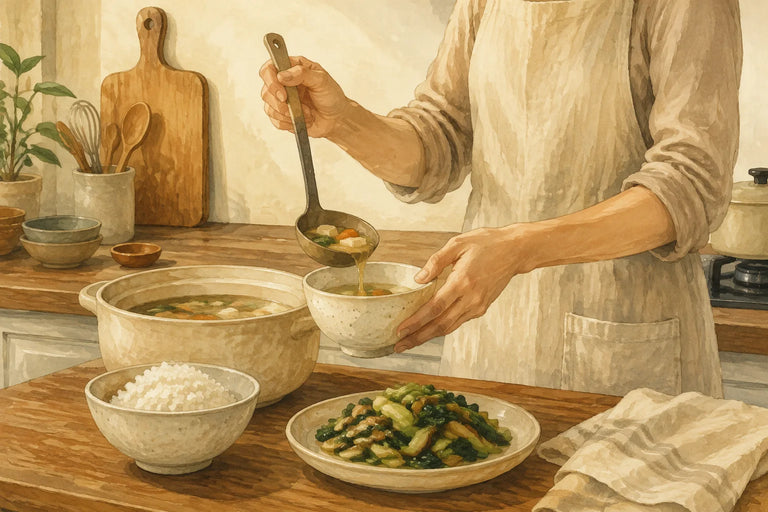
- Postpartum meals: often warm, easily digested dishes such as herbal soups, congee and simple cooked meals.
- Overnight newborn care: staff look after the baby in a nursery and bring the baby back for feeds, according to the family's preferences.
- Feeding support: lactation consultants or other staff may be available on site.
- Postpartum and newborn care: depending on the provider, this may be delivered by doulas, nurses or newborn care specialists. Some Chinese-run centers also have a TCM practitioner or confinement nanny.
- Additional services: these can include massage, sitz baths, recovery classes, newborn photography and housekeeping.
For many families, the main benefit is having time to rest while meals, housework and some newborn care are taken care of. Before booking, ask which services are included and what qualifications the overnight staff hold.
A premium confinement center in Singapore

KAI Singapore, also known as Kai Suites, is one example of a premium Asian confinement center. Its Dunearn Road facility has private suites, round-the-clock nurseries, an in-house kitchen, a spa and wellness center, a hair salon, lactation support, weekly yoga and TCM practitioners. Ask KAI directly for a current package quote, including the suite, stay length and services covered.

Korea has a related model called the sanhujoriwon. A government survey found that 85 percent of Korean mothers who gave birth in 2024 used one. (Korea Times) Several of the newer US postpartum retreats refer to the Korean model when describing their services.
Postpartum retreats in the United States
Postpartum retreats have opened in several US cities since 2022, often inside upscale hotels. Most offer three- to seven-night stays with overnight newborn care. This is different from the month-long model used by many traditional Chinese confinement centers.
The following examples describe provider-published offers checked September 7, 2026. Online information does not confirm availability for your dates.
- Ahma & Co, at the Waldorf Astoria Monarch Beach in Orange County, California. Deluxe King rooms are $1,850 a night for three to six nights, with a three-night minimum; suites start at $2,650. The package includes 24/7 doula support, postpartum meals and a staffed baby lounge.
- The Village Postpartum Retreat Center in San Francisco. Four- and six-night stays start at $1,200 a night and include 24-hour nursery care and postpartum meals.
- theRUBY Postnatal advertises stays at the Omni Houston for $1,495 a night, plus a mandatory 3.31% service/occupancy charge.
Fourth Trimester advertises arranged Chicago postpartum stays. Sanu advertises a Tysons hotel-based postpartum program. Current venue availability and package terms are not established here, and their websites do not establish a single comparable current nightly rate.
The US retreat market changes frequently. Boram paused its New York hotel retreat in early 2025 and now provides in-home care as Boram At Home. Haven has paused its Four Seasons Atlanta retreat while seeking funding for a separate facility. Other retreats have closed or changed their services.
Traditional Chinese confinement centers in the US
Chinese-run yuezi centers are concentrated around the San Gabriel Valley and Irvine, with other providers in the Bay Area and a smaller presence in Flushing, New York. (2026 regional comparison) They generally offer a month-long residential stay, Chinese confinement meals, a live-in caregiver or yuè sǎo, and newborn care. Services are often arranged in Mandarin, and reported prices are commonly several hundred dollars a day.
This guide does not list individual Chinese confinement-center operators. Check the requirements that apply to a specific business and location rather than assuming that the name “confinement center” identifies its licensing status. If you are considering one, visit the premises, ask who is present overnight and what training they have, and confirm that the business is properly insured and permitted to operate at that location.
Postpartum retreat and confinement center costs
Compare the full stay price for the room and duration you want. The examples below are provider-specific calculations in USD, not a U.S. average.
- Ahma & Co: three nights in a Deluxe King at $1,850/night total $5,550 before any additional taxes or charges. Its nightly rate changes with stay length.
- The Village: four nights in a studio at $1,200/night total $4,800 before any additional taxes or charges. Four nights is the shortest option displayed on its pricing page.
- TheRUBY: three nights at $1,495/night plus the published 3.31% charge total $4,633.45, rounded to cents. This is a calculation for three nights, not a minimum-stay claim or final quote; optional services and the arrival-window guarantee can add costs.
Longer stays can use different nightly rates, so multiplying a short-stay rate by 30 does not establish a month-long price.
Insurance and other postpartum benefits
A postpartum retreat is usually an out-of-pocket expense, but some clinical services and other forms of postpartum support may be covered. Benefits depend on your health plan, employer and state.
- Hospital stay: federal law requires health plans that provide maternity benefits to cover at least 48 hours after a vaginal birth and 96 hours after a cesarean, unless the attending provider and mother agree to an earlier discharge. (CMS)
- Postpartum medical care: ACOG recommends contact with your provider within three weeks of birth and a comprehensive visit within 12 weeks. (ACOG) Coverage and cost-sharing depend on your plan.
- Lactation support: non-grandfathered health plans covered by the Affordable Care Act must include breastfeeding support, counseling and a breast pump without cost-sharing. (HealthCare.gov) Ask your insurer how to arrange these benefits and which providers or pumps are included.
- Family leave: eligible employees can receive up to 12 weeks of unpaid, job-protected leave under FMLA. (Department of Labor) As of 2026, twelve states and Washington, DC operate paid family leave programs, generally providing partial wage replacement for a limited period. (state leave overview)
- Doula care: Medicaid programs in more than half of US states reimburse some doula services. (NASHP tracker) Eligibility, covered services and the availability of enrolled doulas vary by state.
- Postpartum home visits: programs such as Family Connects offer free nurse visits in some communities. Nurse-Family Partnership provides no-cost support to eligible first-time parents. Your hospital or local health department can tell you what is available nearby.
Hotel accommodation, meals and general nursery care at a retreat are generally not covered by health insurance. Clinical services provided during a stay, such as lactation consultations or pelvic-floor physical therapy, may be eligible for HSA or FSA use or reimbursement under some plans. Ask for an itemized superbill, review IRS Publication 502 and check with your plan before relying on reimbursement.
Planning postpartum confinement at home
Confinement has traditionally taken place at home with support from relatives or a confinement nanny. Families who choose home care usually need to plan for a comfortable recovery space, practical help, meals and daily postpartum routines.
Preparing a recovery space
Set up a warm, comfortable room before the birth with a bed or feeding chair, water, snacks, diapers and other essentials within reach. Discuss visits in advance so the mother has time to sleep and recover.
Arranging practical help
Make a list of regular household tasks, including cooking, dishes, laundry, groceries, caring for older children and overnight settling. Agree on who will handle each task. Support might come from a partner, relatives, friends, a postpartum doula, a newborn care specialist or a yuè sǎo.
Planning meals
Traditional confinement meals are warm, cooked and served regularly throughout the day. Families may prepare and freeze food before the birth, ask relatives to cook, hire a confinement nanny or use prepared ingredients.
Golden Month's 30-Day Confinement Bundle is available for shipping across the US. It includes a pre-portioned soup blend and breastfeeding tea for each day, along with herbal bath sachets for every other day. The soup and tea are simmered on the stove. The bath sachets are steeped in hot water for three minutes and do not need to be boiled.

Daily confinement practices
Families observe confinement differently. Common practices include drinking warm fluids, dressing warmly, using herbal washes or baths and resting early. Our herbal confinement soups are arranged in stages within a traditional food framework. The stages are not a medical recovery timetable or proof that later blends provide greater nourishment. Our guide to why confinement matters explains the main principles behind the tradition.
Comparing a retreat with care at home
A retreat provides accommodation, prepared meals and overnight newborn care in one place. It may suit families who do not have relatives nearby, need professional overnight support or want a few days of additional help after leaving the hospital.
If staying home fits your family, the six-step confinement planning guide helps you assign meals, household work and backup help.
The cost of home confinement depends on paid-care hours, food and the help already available; compare those costs with the accommodation and services included in a retreat quote. Home support can be arranged across the traditional 30-day period if that fits the household. It also allows the family to settle into its usual surroundings from the beginning. Some families combine the two by spending several nights at a retreat and arranging meals and practical support at home for the remaining weeks.
Questions to ask before booking
- Who is on site overnight, and what qualifications do they hold?
- Is the business licensed as a healthcare facility, a childcare facility or a hospitality provider?
- Is overnight nursery care included, and what is the staff-to-baby ratio?
- What happens if the baby arrives earlier or later than expected?
- Can the stay be extended if needed?
- How much lactation support is included?
- Can a partner stay, and is there an additional charge?
- What is the cancellation and refund policy?
- Can you view the room and a sample weekly menu before booking?
Frequently asked questions
Are there confinement centers in the United States?
Yes. A small number of traditional Chinese-run yuezi centers operate mainly in Southern California and the Bay Area, with services often provided in Mandarin. The larger visible category is the postpartum retreat, which usually offers a hotel-based stay of three to seven nights.
How much does a postpartum retreat cost?
Prices depend on the room, stay length and included services. For example, Ahma & Co lists a Deluxe King at $1,850/night for three to six nights; The Village lists a studio at $1,200/night for four or six nights. The provider-specific calculations above show how the stay length and fees affect the total.
Are postpartum retreats covered by insurance, HSA or FSA?
The retreat stay is generally not covered by health insurance. Some separately itemized clinical services, such as lactation consultations, may be reimbursable or eligible for HSA or FSA use, depending on the plan. Confirm eligibility with your insurer or plan administrator before booking.
How long does postpartum confinement last?
The traditional period is 30 days, although some families observe 40 days or extend the period after a cesarean. Your OB or midwife can advise you on your individual recovery and any medical restrictions.
Can postpartum confinement be done at home?
Yes. Most of the practical elements can be arranged at home, including rest, warm meals, help with housework and newborn support. Our free Ultimate Confinement Guide explains how the month changes from week to week.
Compare providers in our U.S. confinement services directory, or browse its state guides.
Planning for the first month
Whether you choose a retreat or stay at home, plan early for meals, household tasks and overnight support. It is also useful to decide who will coordinate help if the birth date or recovery plan changes. Questions about bleeding, wound care, pain, feeding or physical recovery should be discussed with your OB, midwife or pediatrician.